
How to Decide Without Asking Everyone for Their Opinion
Asking ten people for their opinion usually produces ten contradictory takes and zero decision. Each new voice adds doubt faster than it adds clarity, until the choice stops feeling like yours. Here is how to gather input without losing the decision.
Pick two consultants, max
Choose two people who know the area and genuinely care about your outcome. Three or more and input turns into noise, with each opinion pulling you a different way.
Two is enough to catch a blind spot without drowning your own judgment. More advisors do not make a better decision — they make a slower one.
Ask for specifics, not opinions
"What would you watch out for?" beats "What would you do?" The first hands you information; the second hands you their preferences, which fit their life, not yours.
Specifics inform a decision. Opinions just add weight you then have to argue against, even when you already know the answer.
Decide before sharing
Lean toward an answer first, then check it against your two consultants. Walking in undecided invites them to decide for you, and a borrowed decision is hard to commit to.
If their input genuinely changes your lean, good — that is the signal you wanted. If it just makes you anxious, you learned something about the advice, not the choice.
Note who pushed which way and why
When patterns of advice appear over time, you learn which advisors fit which kinds of decisions — who is steady on money, who is bold on career.
That payoff compounds. A small log of who said what, and whether they were right, makes every future consultation sharper.
See your own reasoning laid out clearly
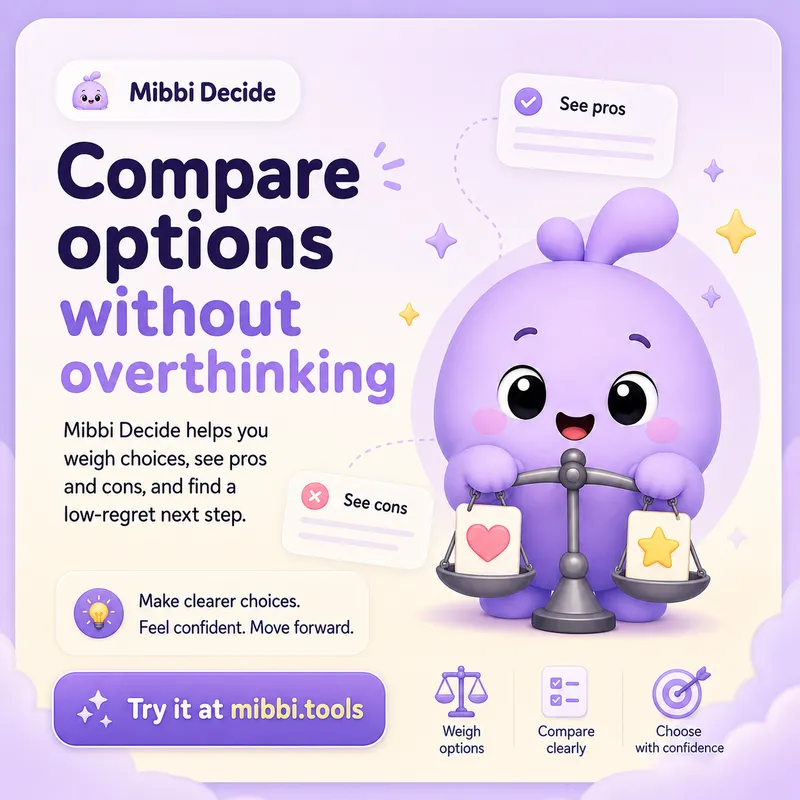
The reason we ask everyone is that the decision feels foggy in our own head. Mibbi Decide lets you set your options against the things you care about, so your reasoning is visible to you before you ever ask a soul.
When you can see the trade-offs clearly, you consult to confirm rather than to be rescued. That is the difference between gathering input and outsourcing the decision.
Try it with Mibbi Decide
Compare options without overthinking.
Open Mibbi DecideFAQ
- What about my partner or spouse?
- That is a different category — shared decision-making, not consultation. The two-consultants rule is for decisions you own; choices you share are made together by design.
- Why do too many opinions cause decision paralysis?
- Each new voice adds a competing weight without resolving the ones already there, so the trade-offs multiply faster than they clarify. Limiting input to two trusted people keeps the decision tractable and keeps it yours.
Related guides
- How to Make a Decision With Pros and Cons Pros and cons lists fail when they get long. Here is a tighter way to compare options that ends with a low-regret next step.
- How to Avoid Overthinking Simple Decisions A short guide to making small choices fast — without saving your decision energy for the things that actually matter.
- How to Decide Between Two Job Offers A practical method for comparing two offers without spreadsheet paralysis — and without ignoring the gut feeling.